


Thanks for Joining Us in Brasilia for the 8th Summit for Space Sustainability!

Back in early 2024, the team at Secure World Foundation debated where we felt the 8th Summit for Space Sustainability could have the biggest impact. This policy forum has always been intended as an opportunity to break through the silos of the space sector, to bring together civil society, government, and the military to have unique and frank conversations about the challenges faced in ensuring space safety, sustainability, security, and stability, and identifying concrete steps forward. The event has been held in a diverse number of locations around the world, and in evaluating locations for this year’s event, we explored how we could best continue to bring in new voices to the conversation in order to better understand and address aspects of space sustainability challenges. We were truly honored this year to work with our co-hosts, the Brazilian Space Agency (AEB) and the Secretariat of Science, Technology and Innovation of the Federal District (SECTI-DF), to hold this conference in Brasilia, Brazil, and for the first time, bring it to the Latin America and the Caribbean (LAC) region.
The LAC region brings distinctive opportunities and challenges to the global sustainability agenda, ranging from critical reliance on space‑enabled services to diverse institutional capacities across countries to unique equity and access concerns across many types of space activities.
Brazil’s growing capabilities in Earth observation, satellite development, and launch infrastructure, as well as its role as a middle power state in space diplomacy, made it the perfect regional convener. We hope this event will contribute to a shared regional agenda on space sustainability priorities that can feed into international deliberations, as well as actionable recommendations for national policy and regulatory implementation.
We welcomed 533 registered participants, including 97 virtual attendees and 73 young professionals, from more than 30 countries. We also want to thank our 30 partners and sponsors, without whom this event would not have been possible.
More than 75 speakers shared their insights on topics including regional coordination for space security, space activity and governance for the Poles, space situational awareness data, Brazil’s institutional approach to space sustainability, the connection between sustainability on Earth and in space, and regulatory requirements, design, and burden. Keynotes, highlight talks, and fireside chats rounded out a packed agenda and addressed such topics as regional industry perspectives, space traffic management activities by the China National Space Administration (CNSA), multilateral cooperation towards stability and participation in space, and the South African National Space Agency’s views on space sustainability. Couldn’t make it to the event? All sessions were recorded and are available to watch on the SWF Youtube Channel.
Voices from the 8th Summit for Space Sustainability


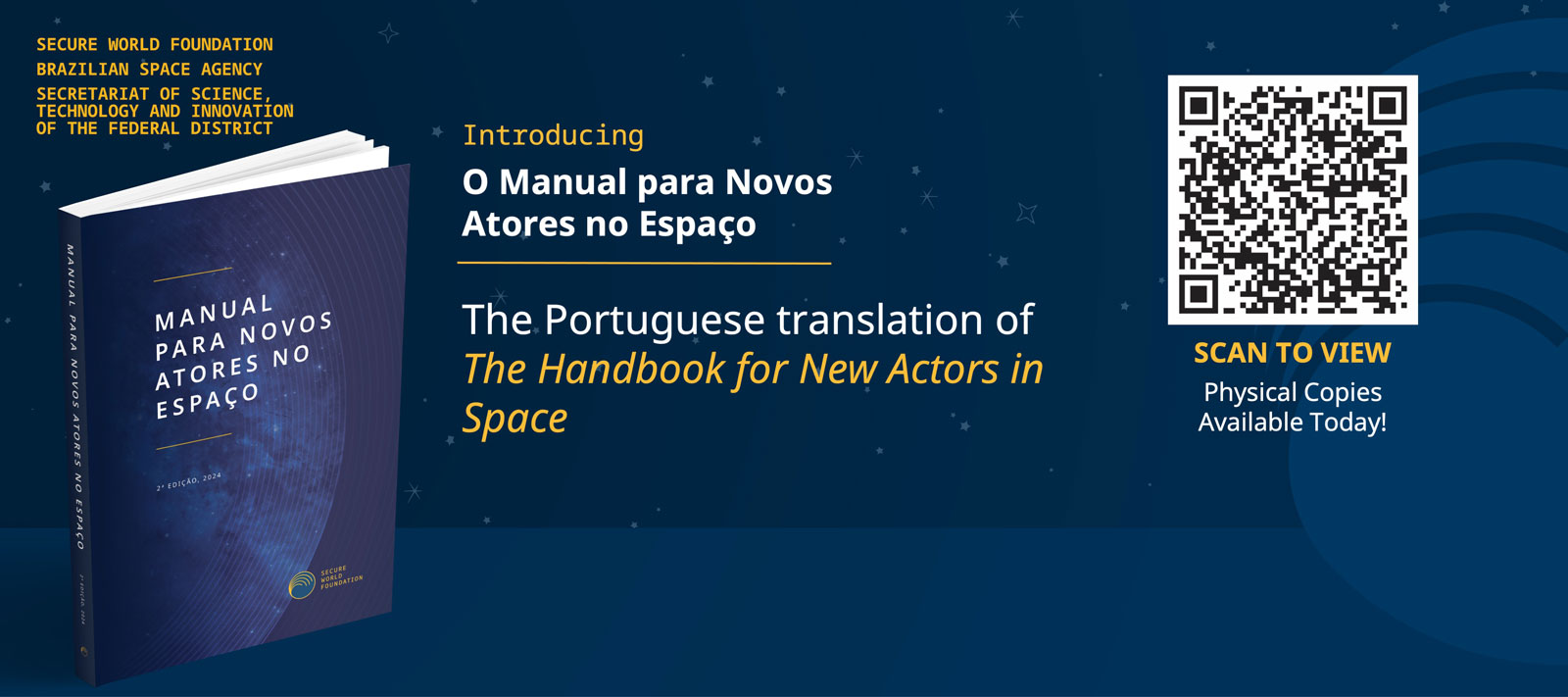
In addition to these valuable discussions, we were delighted to feature two major announcements during the 8th Summit for Space Sustainability. First, we officially launched the Portuguese translation of the Handbook for New Actors in Space, a reference publication designed to support emerging governmental, academic, and commercial stakeholders entering the space sector. The Handbook provides a comprehensive and accessible overview of the space ecosystem, including fundamental legal and regulatory frameworks, space governance and sustainability principles, capacity‑building strategies, and best practices for the safe, responsible, and cooperative use of outer space. The translation of this Handbook into Portuguese represents a significant step toward inclusivity and global outreach in space activities. Portuguese is spoken by more than 300 million people worldwide across multiple continents, including regions with rapidly growing interest in space science, technology, and applications. Making this essential resource available in Portuguese lowers language barriers, facilitates knowledge transfer, and empowers a broader community of stakeholders to engage effectively in space policy, capacity development, and international cooperation.
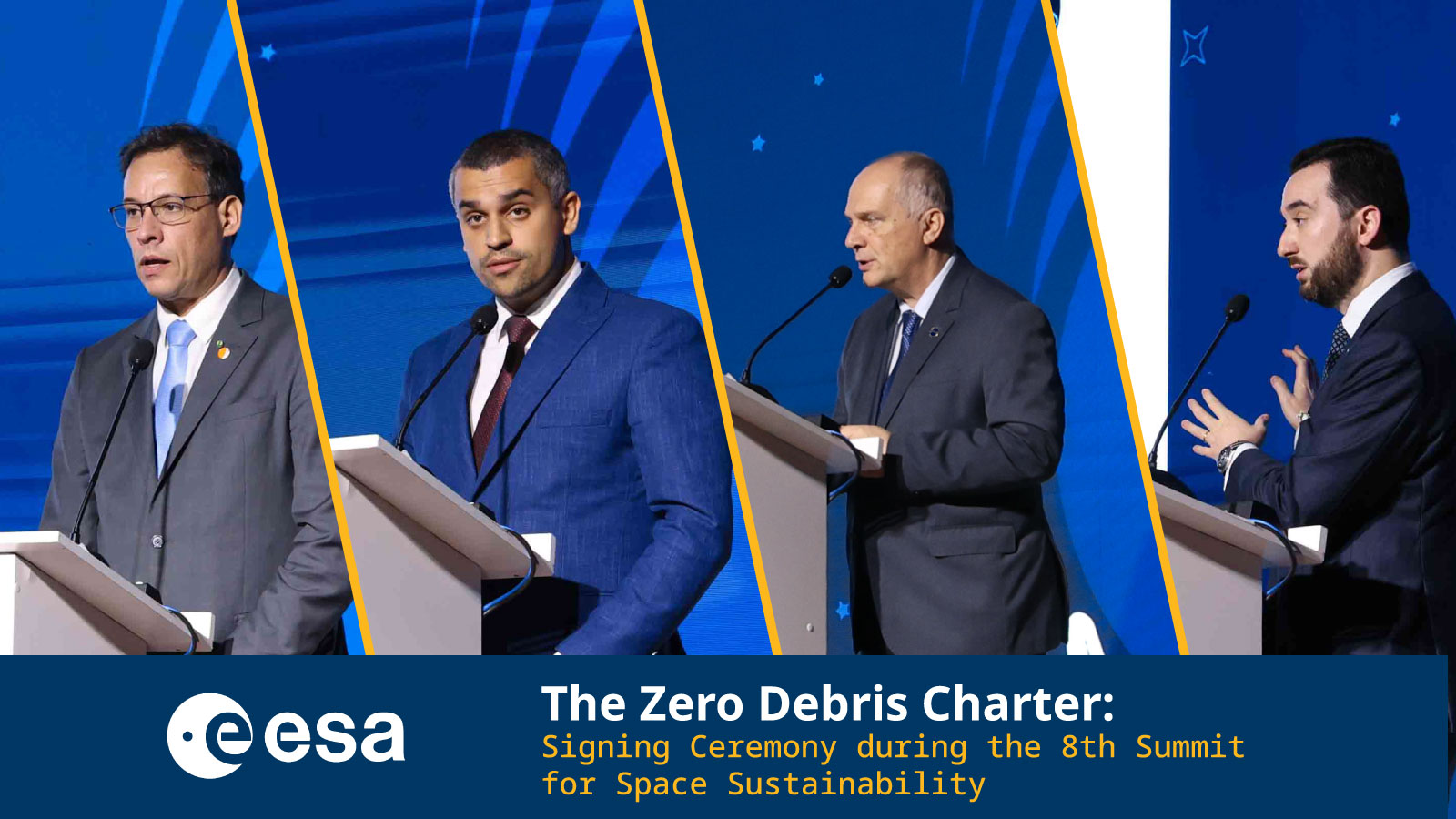
Second, we held a signing ceremony for three new members of the ESA’s Zero Debris Charter. The Zero Debris Charter is a non-legally binding, community-driven initiative facilitated by the European Space Agency that brings together organizations working toward a zero-debris future by 2030. Since its publication in 2023, more than 250 organizations from 35 countries have joined the initiative. We were proud to watch as the Brazilian Space Agency, Safe on Orbit, and Visiona added their names to this important initiative.
Finally, addressing the challenges of space sustainability requires fresh perspectives, bold ideas, and a new generation of leaders ready to shape the future. Accordingly, Secure World Foundation and its partners were proud to host an amazing group of young professionals, who enjoyed discounted registration, a mentoring breakfast, and full access to the receptions and other networking events. We were also proud to partner with the Space Generation Advisory Council to hold SG[Brasil] 2026, which brought together university students, young professionals, and space enthusiasts for a collaborative exchange of knowledge focusing on sustainability and the future of space exploration.
Thank you again to our government partners, industry and civil society sponsors, attendees, and speakers for supporting another successful Summit for Space Sustainability!
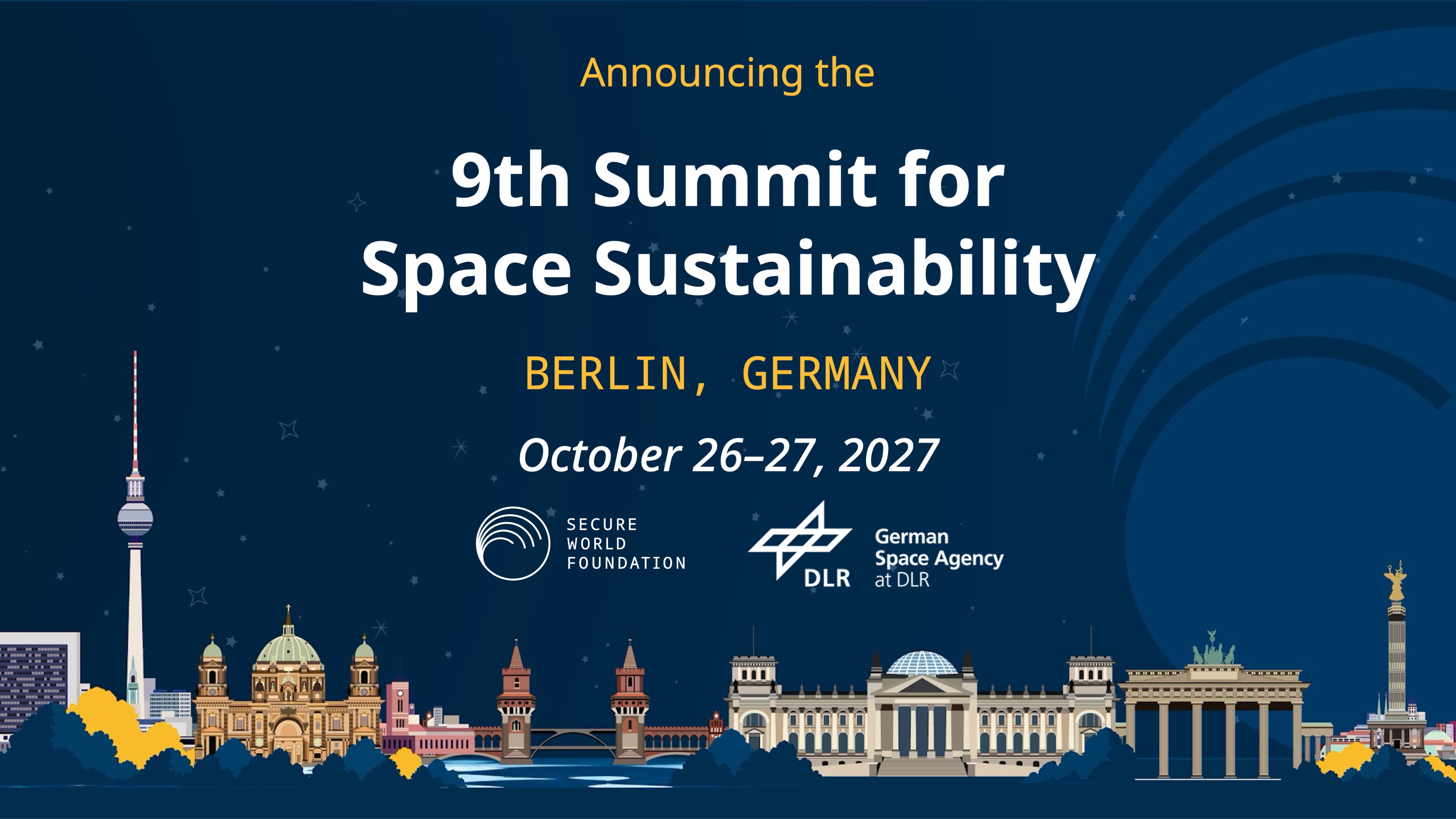
As you may have seen at the event, we are also thrilled to announce that the 9th Summit for Space Sustainability will be in Berlin, Germany, on October 26-27, 2027, co-hosted with the German Space Agency at DLR. We are already hard at work planning the themes, logistics, and partnerships for this policy forum. If your organization wants early access and to participate in this important event, please reach out via our contact form for more information.


No results. Click here to access other publications.