

The Secure World Foundation will host a public webinar on February 18, 2026, from 10:00–11:30 AM ET, featuring the 2025 Space Sustainability Research Fellows and their latest research on two issues shaping the future of space sustainability: information sharing and the circular space economy.
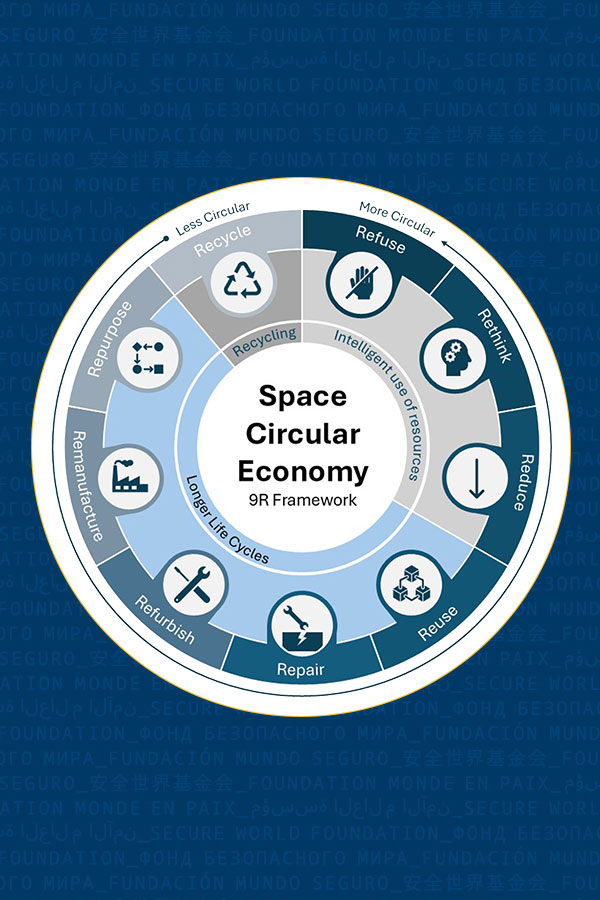
Each year, SWF’s Space Sustainability Research Fellowship program supports experts in examining core concepts that underpin the secure, sustainable, and peaceful use of outer space. The 2025 Fellowship focused on practical and policy-relevant challenges related to how information is shared across the space sector and how circular economy principles can reduce waste, extend asset lifecycles, and support long-term sustainability in orbit.
During the webinar, Fellows Deborah Housen-Couriel, Dr. Beril Saadet Turnbull, and Calum Turner will present their research findings and discuss implications for policymakers, industry actors, and international organizations. The discussion will conclude with a moderated Q&A session with the online audience.
The event is open to the public and will be held online.
SWF has released the Fellows’ full reports and executive summaries in advance of the webinar:
- Information Sharing to Promote the Sustainability of Outer Space Activity: Towards Development of a Model Agreement (Deborah Housen-Couriel)
https://www.swfound.org/publications-and-reports/ssri-fellows-report-2025-information-sharing
This report reviews information-sharing platforms used across the space sector, identifies best practices and incentives that drive participation, and presents principles for a draft model agreement to support more effective, risk-focused information exchange. - Exploring the Circular Economy in Space (Dr. Beril Saadet Turnbull and Calum Turner)
https://www.swfound.org/publications-and-reports/ssri-fellows-report-2025-circular-economy-in-space
This report examines how circular economy concepts could reduce waste and extend satellite lifetimes, using a nine-part framework and a grounded look at what is feasible now, what depends on in-space servicing and manufacturing, and what barriers still block broad adoption.