


Exploring the Circular Economy in Space


Space activity depends on finite materials, expensive launches, and fragile orbital environments. This SSRI Fellows Report explores whether applying circular economy principles to space systems can reduce waste, extend satellite lifetimes, and support long-term sustainability.
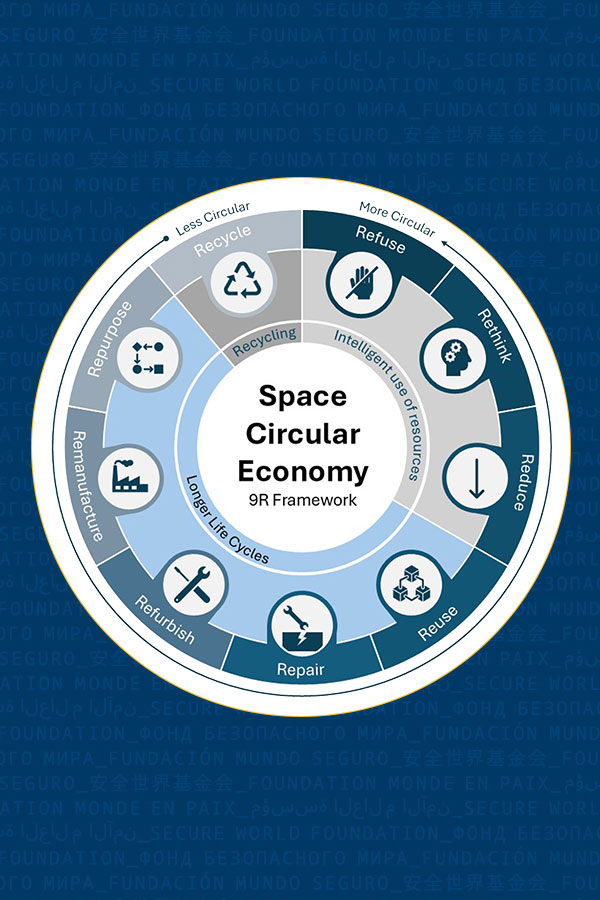
Drawing on literature review, case studies, and expert interviews, the report examines how circularity strategies already used on Earth translate to space activities. It introduces a nine-part framework that includes reuse, repair, refurbishment, remanufacturing, and recycling, and evaluates where each approach is technically and economically feasible today. The authors pay particular attention to in-space servicing, assembly, and manufacturing, which underpin many circular strategies.
The report also addresses the limits of circularity in space. High costs, regulatory uncertainty, technical constraints, and the rise of low-cost disposable satellites all challenge widespread adoption. Rather than presenting circularity as a cure-all, the analysis shows where incremental progress is realistic and where expectations should remain cautious.
Readers will find a balanced assessment of environmental, operational, and policy tradeoffs, along with clear takeaways for governments, industry, and researchers seeking practical pathways toward more sustainable space activities.

