


A Wrap-Up of the 7th Summit for Space Sustainability

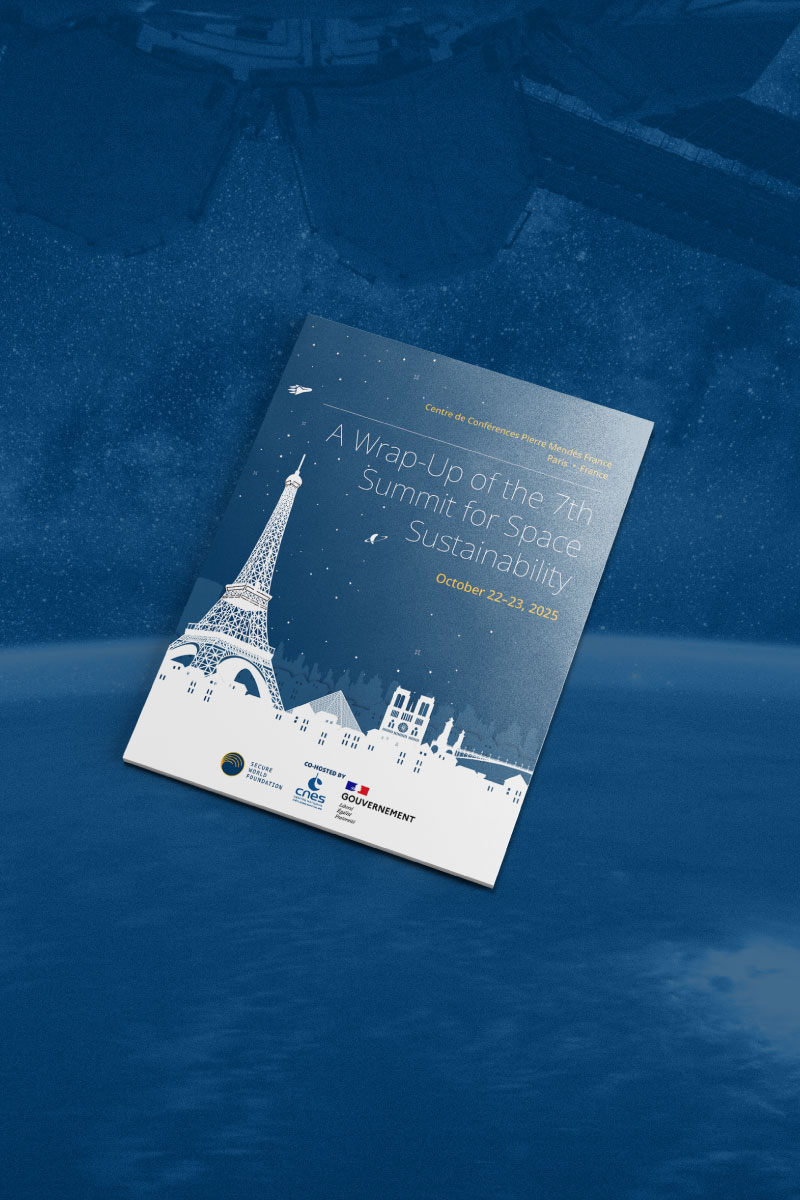
The 7th Summit for Space Sustainability focused on a practical question that now sits at the center of global space policy: how do you keep space usable as more governments, companies, and institutions depend on it? Held in Paris on October 22 and 23, 2025, the event brought together more than 490 participants to examine how policy, technology, and market design shape the future of space sustainability. Across two days, speakers addressed orbital debris, space traffic coordination, atmospheric reentry impacts, spectrum management, sustainability metrics, and the economics of long-term responsible space activity.
The report makes clear that the conversation has moved well past broad statements of support. Many sessions addressed operational questions: how to design spacecraft for end-of-life, how to improve post-mission disposal, how to share data that supports safer operations, and how to build systems that can handle a more crowded orbital environment. Speakers returned again and again to the same point: space sustainability depends on decisions made early in mission design, not just on cleanup efforts after something goes wrong. That came through in discussions of debris mitigation, in-orbit servicing, active debris removal, lifecycle design, and the push for standards that operators can actually use.
A large share of the event focused on space traffic management and space situational awareness. The report shows how closely those issues are now tied to orbital debris, transparency, and international coordination. Speakers described a growing number of national and regional SSA systems, along with the need to harmonize data, services, and operating practices across them. They also highlighted the new COPUOS Expert Group on Space Situational Awareness and the broader challenge of turning better tracking and better data-sharing into real coordination in orbit. For readers who follow space governance, that part of the report is especially useful because it connects technical capabilities to live multilateral processes.
The report also gives real weight to environmental sustainability in space activities. Several sessions examined possible atmospheric impacts from launch and spacecraft reentry, including the growing body of research on ablation products and the current limits of scientific understanding. The discussion was measured. Speakers did not claim that the science is settled. They argued that the sector needs better metrics, more shared research, and greater transparency around spacecraft materials if policymakers and operators are going to respond credibly. That thread runs alongside broader discussion of lifecycle assessment, eco-design, and efforts in Europe to bring environmental sustainability into future regulatory frameworks for space activities.
Another strength of the report is that it does not treat space sustainability as a narrow technical issue. It places policy, regulation, commercial incentives, and security concerns in the same frame. Sessions looked at how France is updating its operational safety framework, how ESA is advancing Zero Debris work, how the European Commission is linking sustainability to future regulation, and how countries such as Brazil, Japan, Portugal, Germany, and the United Kingdom are tying national space policy to debris mitigation, servicing, resilience, and long-term access to orbit. The report also captures a sharper edge in current debates through discussions of dual-use systems, the blurred line between commercial and military activity, and the need for rules, standards, and transparency that can withstand pressure.
The economic side of space sustainability also gets serious treatment here. Speakers discussed the funding gap between early technology development and commercial scale, the role of public procurement in creating demand, and the challenge of building viable markets for debris removal, in-orbit servicing, and other sustainability services. The report does a good job of showing that space sustainability is not only a regulatory question. It is also a market question. If policymakers want safer, more sustainable operations, they have to consider how standards, investment, insurance, procurement, and industrial policy shape operator behavior.
The event’s international reach matters too. Participants came from 35 countries, with particularly strong representation from France, the United Kingdom, the United States, Germany, Hungary, and Japan. More than 140 young professionals took part, including 105 in person, and the mentoring program connected early-career participants with senior leaders from government, industry, academia, and civil society. That mix shows up throughout the report. It reads less like a simple event recap and more like a structured record of where current debates on space sustainability, space traffic management, orbital debris, international cooperation, and global space policy stand right now.

